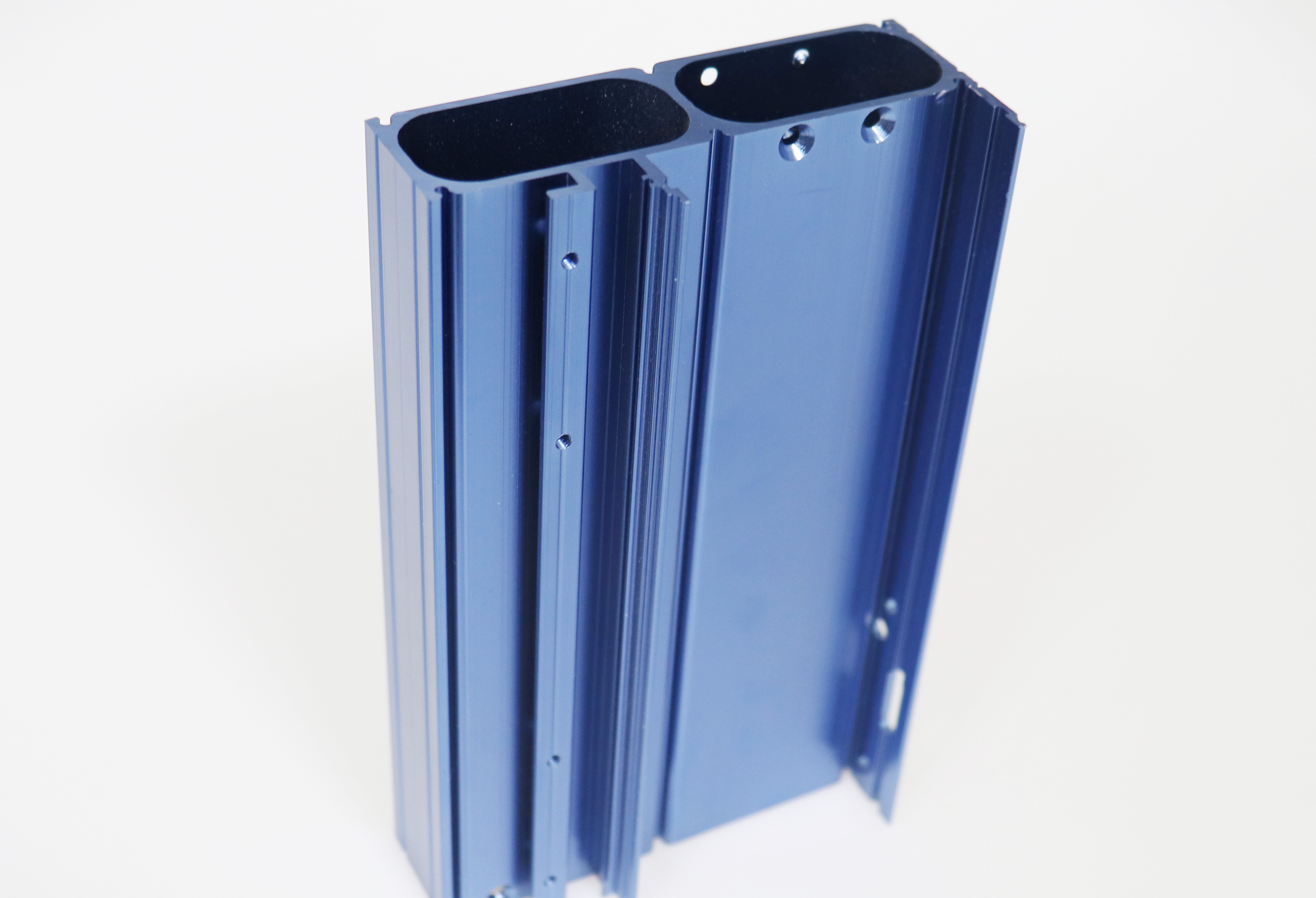
This article compares 6063 and 6061 aluminum profiles to help you make an informed choice.

1. What is 6063 aluminum profile?

6063 aluminum is a heat-treatable alloy widely used in construction and architectural applications. It is highly valued for its excellent extrudability, smooth surface finish, and good corrosion resistance.

Its ability to form complex cross-sectional shapes makes 6063 aluminum an ideal material for producing custom extruded profiles.

2. What is 6061 aluminum profile?

6061 aluminum is a versatile structural alloy known for its high strength, good machinability, and balanced mechanical properties. It is typically supplied in a heat-treated condition (such as T6).

Compared to 6063, 6061 aluminum generally offers higher strength in the same T6 temper, making it suitable for applications requiring greater load-bearing capacity or structural reliability.

3. What are the respective advantages of 6063 and 6061 aluminum profiles?

Key advantages of 6063 aluminum profiles:

Excellent extrudability: Suitable for manufacturing complex shapes and thin-walled profiles.
Superior surface finish: Ideal for anodizing, powder coating, and other decorative surface treatments.
Good corrosion resistance: Performs well in various indoor and outdoor environments.
Design flexibility: Supports custom shapes, sizes, and cross-sections.
Wide range of applications: Commonly used for doors, windows, curtain walls, heat sinks, and furniture components.

Key advantages of 6061 aluminum profiles:

High mechanical strength: Suitable for various structural and load-bearing components.
Good machinability: Performs excellently in CNC machining, drilling, milling, and cutting operations.
Good corrosion resistance: Suitable for a wide range of industrial environments. Heat-treatable: Excellent mechanical properties can be achieved through appropriate heat treatment.
Versatility: Suitable for industrial equipment, mechanical components, and structural parts.

4. What are the main differences between 6063 and 6061 aluminum profiles?

The table below summarizes the key differences between these two alloys.
| Characteristics |
6063 Aluminum Profile |
6061 Aluminum Profile |
| Key Advantages |
Extrudability and surface finish |
Strength and machinability |
| Mechanical Strength |
Generally lower |
Generally higher |
| Extrudability |
Excellent |
Good |
| Complex Profiles |
Partially well-suited |
Suitable (depending on design) |
| Surface Finishing |
Highly suitable for anodizing and decorative finishes |
Good |
| Corrosion Resistance |
Very good |
Good to very good |
| Machinability |
Good |
Very good |
| Typical Applications |
Architectural and decorative profiles |
Structural and industrial components |
5. Extrudability: Why is 6063 a popular choice for custom aluminum profiles?

Extrudability is one of the primary differences between these two alloys.

6063 aluminum alloy is particularly well-suited for producing profiles with complex cross-sections, thin walls, grooves, channels, and other custom geometries. Its excellent extrusion characteristics enable manufacturers to achieve products with consistent dimensions and superior surface aesthetics.

6061 can also be extruded into custom shapes, but for certain complex designs, its extrusion performance may not be as ideal as that of 6063. Feasibility depends on factors such as cross-sectional shape, wall thickness, extrusion ratio, tooling, and production conditions.


6. 6063 vs. 6061: How to choose the right aluminum profile?

The choice of the best alloy depends on the specific technical requirements of your application. Choose 6063 aluminum profiles if you require:

Complex or custom extruded cross-sections
Excellent surface appearance
High-quality anodized finishes
Architectural and decorative components
Aluminum heat sinks, tracks, guide rails, or window frames

Choose 6061 aluminum profiles if you require:

Higher mechanical strength
Structural or load-bearing components
Good CNC machinability
Industrial equipment parts
Components requiring a balance of strength and corrosion resistance

Before making a final decision, consider factors such as required load-bearing capacity, operating environment, profile dimensions, surface finish, and applicable industry standards.

6063 and 6061 aluminum profiles each offer distinct advantages, but they serve different purposes. 6063 aluminum is generally the better choice for complex extruded shapes, architectural applications, and scenarios requiring superior surface finishes. In contrast, 6061 aluminum is typically more suitable for applications demanding higher mechanical strength and good machinability.

The ideal choice is an alloy that meets engineering requirements while effectively controlling manufacturing and project costs.

If you require custom aluminum extrusions, please contact Huayang Aluminum for material selection advice and a tailored quote.








.png)